Thank you to everyone that purchased a tree through this program.
Image
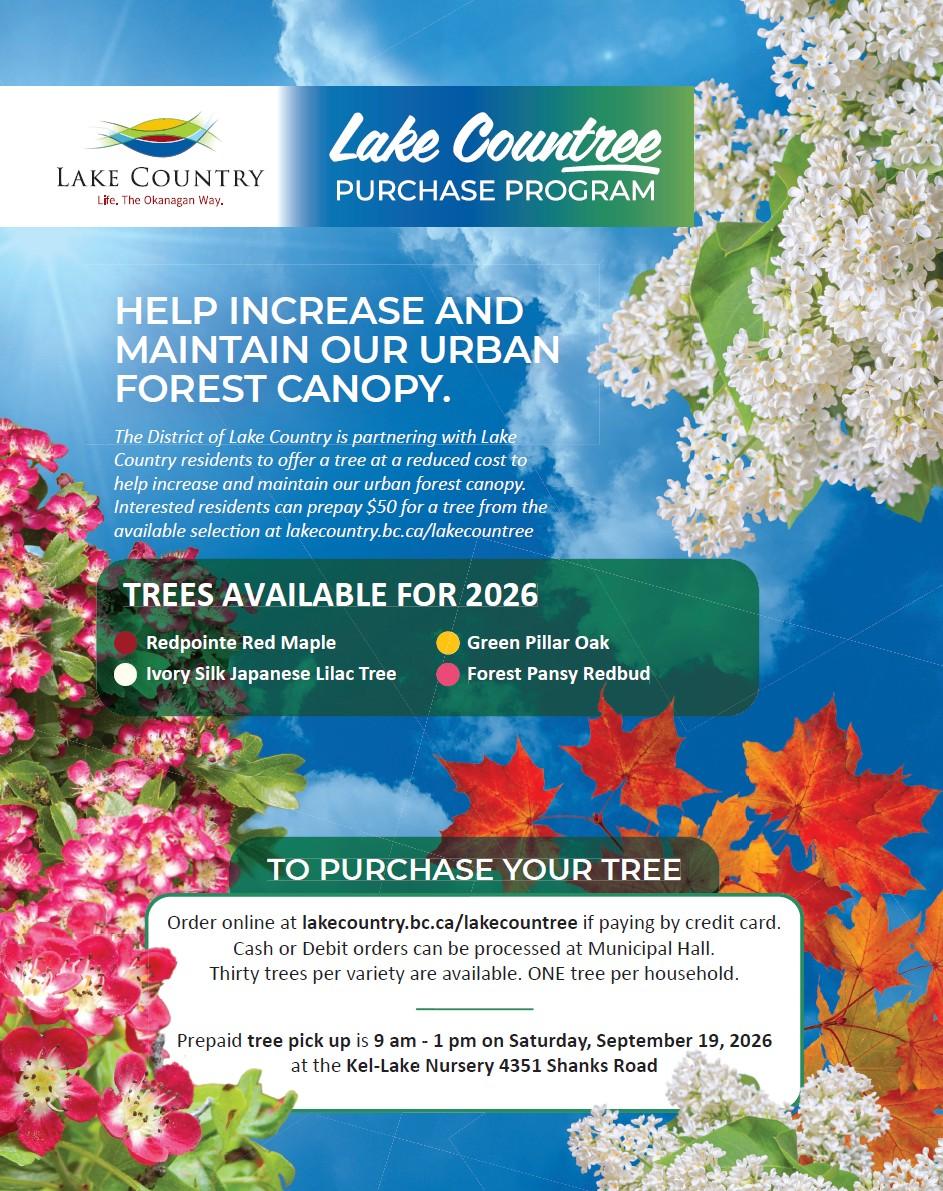
Lake Countree is a residential planting initiative developed to encourage citizens to help grow and preserve Lake Country's urban forest canopy. 2026 is the fifth year for this initiative where Lake Country residents can purchase one tree per household for the low price of $50 (incl. GST).
Tree sales for our 2026 Lake Countree program will be open from Tuesday, July 14 until Friday, September 18, or until trees are sold. Note: There is NO waitlist an No refunds. Once the 120 trees (30 of each variety) are sold, there are no more available for this year's program.
To purchase a tree, please visit our ActiveNet program registration online system to sign in or set up an account. Call 250-766-5650 if you need assistance to set up your online account.
Where do I pick up my tree? Lake Countree pickup will take place on Saturday, September 19 (9:00am - 1:00 pm) at Kel-Lake Nursery. The trees are in 10 gallon pots, roughly 6 to 12 feet tall. The size is to ensure that holes can be hand dug and the trees are easily handled.
2026 Fall Tree Varieties
All of the tree varieties on offer this year are chosen for their hardiness to endure the weather of the Okanagan region. We have selected the trees according to their unique features including size, hardiness, exposure, wildlife value and seasonal interests. We recommend that residents research the tree they would like before purchase.
Trying to find the right tree for the right location is paramount and why we are offering four varieties with different attributes to choose from. The trees were picked based on their growth rate, size at maturity, water requirements, carbon sequestering, oxygen production, sun orientation, adaptivity to various soil conditions, aesthetics, availability, life span and to help reduce monocultures in neighborhoods.
Native varieties of trees are great, and are planted all over the District when we are re-establishing naturalized areas or less urbanized parcels of land, however native trees are not always the best choice for subdivisions and the sizes of the lots. Ponderosa Pines, Douglas Fir, Abies, Black Cottonwood, Birch and Western Red Cedar (which are only a few or our native varieties) grow in specific areas of our forests and do not always thrive in urban situations, due to elevation, being irrigated, soil conditions, traffic around the root zone for example.
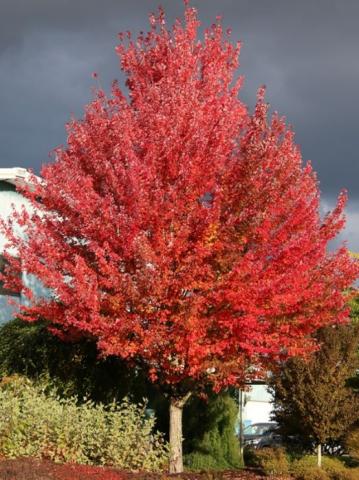
Height: 45ft
Spread: 20-40ft
Exposure: Full Sun, Partial Sun/Shade
Hardiness Zone: 4-7
Shape: Rounded/Upright
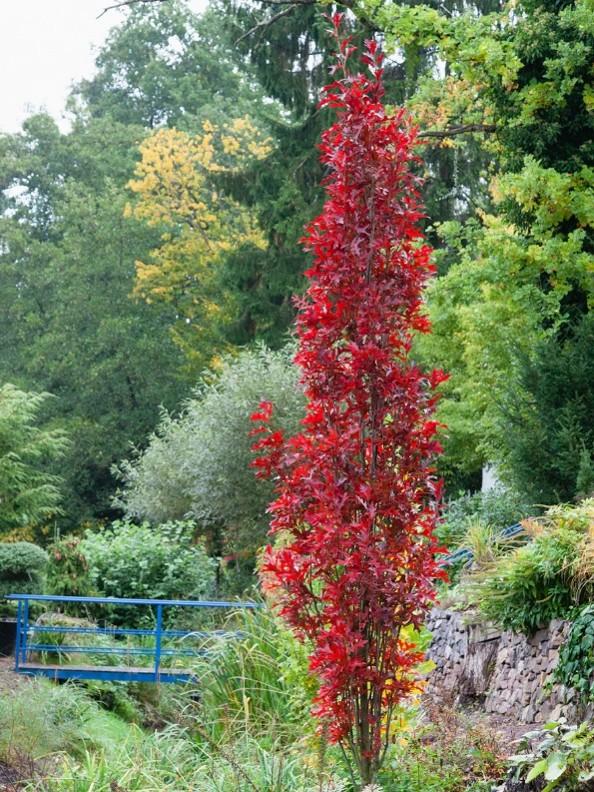
Foliage color: Bright Green in the spring and summer, turning Bright Red/Scarlet in the Fall
Water Requirements: Medium
Description: Combining the refined form and foliage of the best Acer rubrum cultivars, with urban tolerances and a faster growth rate. Possesses an improved branching habit and is great at enduring heat and drought. Thrives best is well drained soil but is tolerant of wet conditions. Rich, dark green summer foliage, turning brilliant red fall color. Well behaved balanced growth requiring very little pruning, with strong branching makes it easy to care for. The Redpointe maple has improved insect resistance, heat and drought tolerance with a tolerance to higher pH soils.
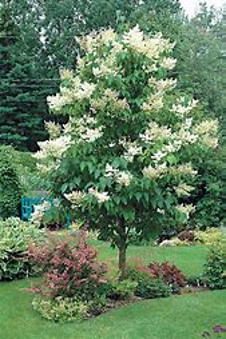
Foliage color: Bright Green in the spring and summer, turning Yellow in the Fall
Water Requirements: WaterWise and FireSmart. Drought tolerant once established
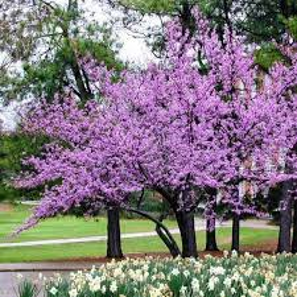
Description: Upright spreading, compact form with dark green heart shaped foliage that turns yellow in the fall. In early summer large panicles of cream white fragrant blooms that make this tree a specimen in any yard or garden, attracting butterflies, hummingbirds and insect pollinators. With a tolerance of a wide variety of soils, the Japanese Lilac Tree becomes drought tolerant once established.
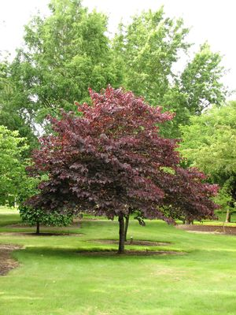
Foliage color: Red/purple, turning orange/bronze and red purple in the fall
Water Requirements: Medum through establishment and drought tolerant once established
Description: Noted for its striking foliage, is a small to medium sized tree with profuse, pea-like magenta flowers that appear before the foliage in the spring. Blossoms last for several weeks before being joined by broadly heart-shaped, shimmering red/purple leaves that turn orange, bronze and red purple in the fall. A generally pest-free and deer tolerant variety that requires very little pruning
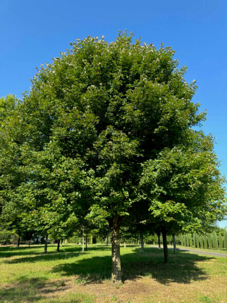
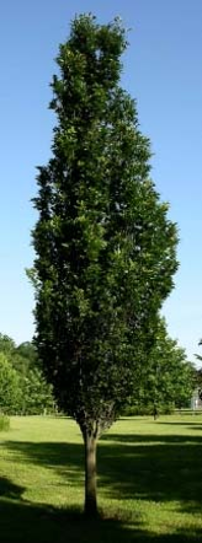
Foliage color: Dark green in the spring and summer, turning maroon, red in the Fall
Water Requirements: medium
Description: This narrow pin oak is a fantastic addition to the urban garden, that requires very little pruning. The stiffly upright branches hold lustrous dark green leaves that turn a deep red in the fall. Able to tolerate a wide range of difficult growing conditions. This narrow oak prefers an area with full sun or light open shade. Likes well drained soil and will tolerate sandy to clay soils if the drainage is adequate. Drought tolerant once established but may require additional watering during periods of prolonged dry weather.
What will the size of the tree be at maturity and how tall will it grow?
Will it fit in the space you have selected?
What type of landscape will the tree be planted in (garden bed or turfgrass)?
Will the tree be irrigated?
Are there underground services or utilities that the roots will interfere with?
Call BC 1 CALL (1-800-474-6886 or bc1c.ca) and a utility locate service company to ensure the spot you have chosen to plant the tree in will not impact power, water or other utilities.
Are there overhead utilities that the tree will impact as it grows?
Protect your tree during transport; pad the trunk, and gently bundle the branches with burlap or string.
Prune dead or broken branches before planting.
Plant the tree as soon as possible after receiving it; if not, keep it in a shaded area and water as needed.
Call BC 1 Call (1-800-474-6886 or bc1c.ca), and a utility locate service company prior to digging or excavating.
Prepare the planting spot by digging a hole 2-3 times wider than the root ball and only as deep as the root ball when placed in the hole. The root flare/collar (where the tree's trunk meets the roots) should be even with the top of the hole or slightly above.
Gently remove the tree from the plastic container and look for circling or girdling roots, and if present, make a slice or cut the root to inhibit future growth.
Use native soil to backfill where possible. If the native soil is heavy clay or extremely rocky, amend the native soil with compost and topsoil at a 50/50 mixture with the native soil. Bone meal, a high phosphorus fertilizer or fish fertilizer can be incorporated at this time.
Place the tree in the center of the hole and begin to backfill until the hole is two-thirds full, gently packing down to remove air pockets and water the hole to settle the soil.
Let the water drain and continue filling the hole with the remaining soil. Repeat the packing and watering routine.
Use the excess soil to build a well around the hole to help hold and direct water to the root ball.
Staking the tree is only necessary if the tree is planted in an area of high winds or if the soil is shallow.
Applying mulch at a depth of 4 inches around the tree area covering the root ball is important to reduce weed growth and retain water in the soil. Keep the mulch 4-6 inches away from the trunk.
Water slowly and deep once a week after planting. More frequent watering may be required in drought-like conditions.
Avoid fertilizing the tree with a high nitrogen fertilizer in the first year.
Remember these are general guidelines for planting and maintaining a tree. Each location and tree can differ, so contact your local garden center for more information.
Benefits trees offer:
Remove atmospheric carbon dioxide and air pollutants
Reduce energy usage
Filter stormwater
Provide shade and cool yards, buildings, and hot city streets
Release water vapour
Promote calmness and mental well-being
Provide a habitat, food sources and shelter for wildlife